
Inside our field: how an ICHIGO strawberry actually grows in India
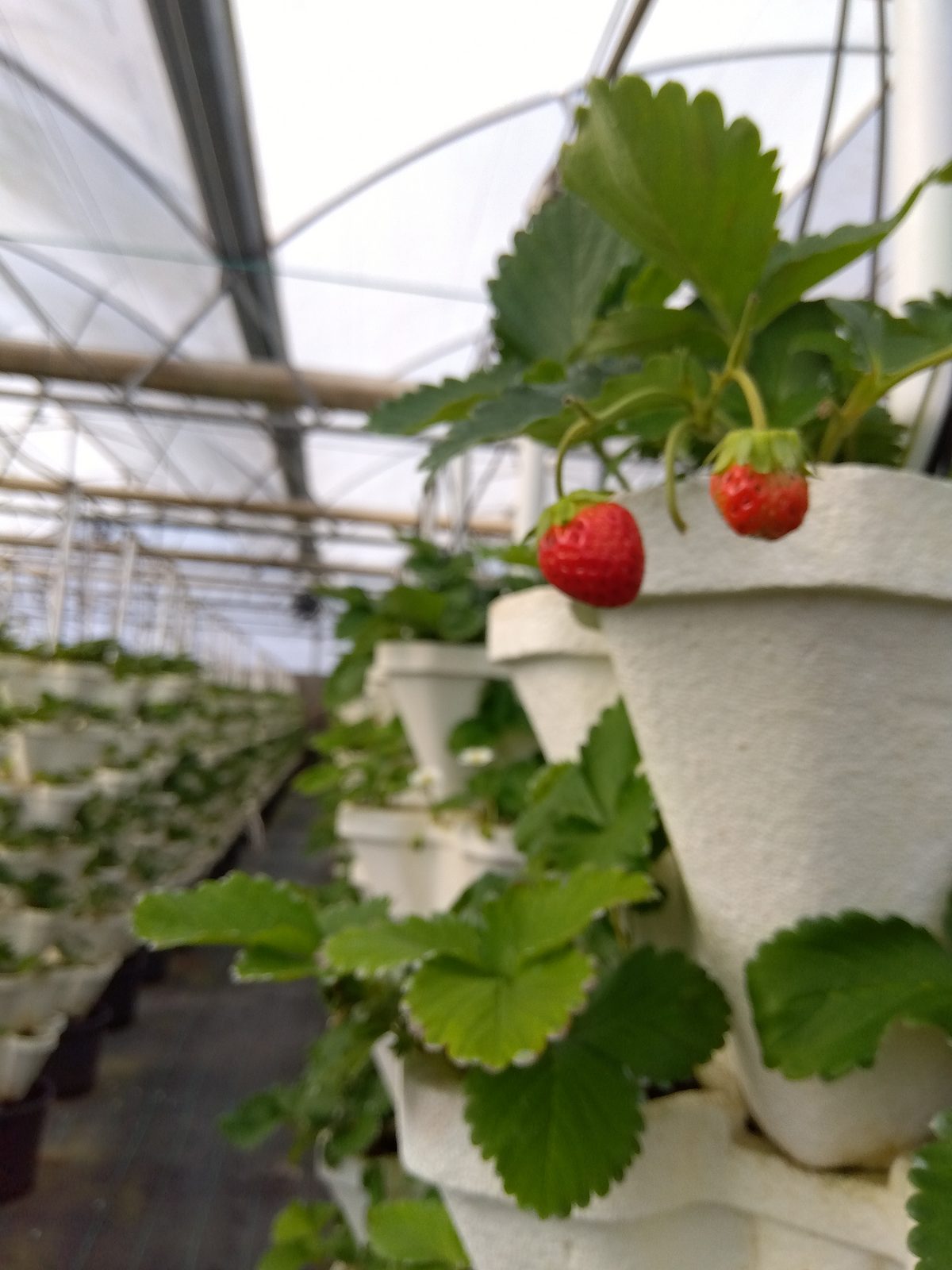
A good strawberry doesn’t happen. It’s the last step of a chain of decisions that started months earlier, in the soil mix, in the cultivar, in the temperature of a polyhouse at two in the afternoon. Most of the premium strawberries that reach an Indian kitchen are either flown in at a luxury price, or grown in an open field and hoped for — which is why the box that looked good on Monday is soft by Thursday.
We grow ours to a method. Here’s what that actually looks like, walking our own field from flower to box.
The plant is Japanese. The soil is Indian.
We don’t airfreight berries from Japan. We plant Japanese cultivars in India — Miyoshi & Co’s Berry Pop F1 varieties, SAKURA (bred for sweetness and aroma) and HARUHI (bred for a stable sugar–acid balance and year-round consistency) — under Japanese agricultural supervision.
That single choice decides most of what follows. India’s workhorse field varieties — Winter Dawn, Camarosa, Nabila — were bred for yield and for surviving a long truck ride. They’re good berries solving a different problem: volume. SAKURA and HARUHI were selected for the plate — perfume, even ripening, a calyx that stays green and upright, flesh dense enough to halve cleanly. You can taste the brief at first bite.
Vertical towers, no soil, full control
Walk into the polyhouse and the first thing you notice is that the berries are at eye level. The plants grow in stacked, soil-free towers — a vertical hydroponic system — instead of lying on the ground.
That isn’t for the photo. It does real work:
- No soil-borne disease, no soil-borne inconsistency. Each plant gets the same root environment, so a tray from the top of the house behaves like a tray from the bottom.
- The fruit never touches the ground. No mud splash, no rot pocket, no berry pressed flat under its own row. Every berry hangs free, colours evenly, and stays inspectable.
- More plants per square metre. Vertical means the same footprint carries far more productive canopy — which is how a controlled, premium method stays economic.
- Picking without bending. Pickers work standing, at the fruit, which means a cleaner pick and less bruising before the berry ever leaves the plant.
Above it all is the polyhouse — not decoration, climate control. It holds temperature and humidity, keeps monsoon rain off the fruit, and buys us a longer, steadier season than open-field cultivation can. The plant’s nutrition is dosed, not guessed: we hold the feed lean through growth and lift it as the fruit colours, so the sugar lands where it belongs.
The pick window is measured in hours
This is where most strawberries are lost — not in the field, but in the timing of leaving it.
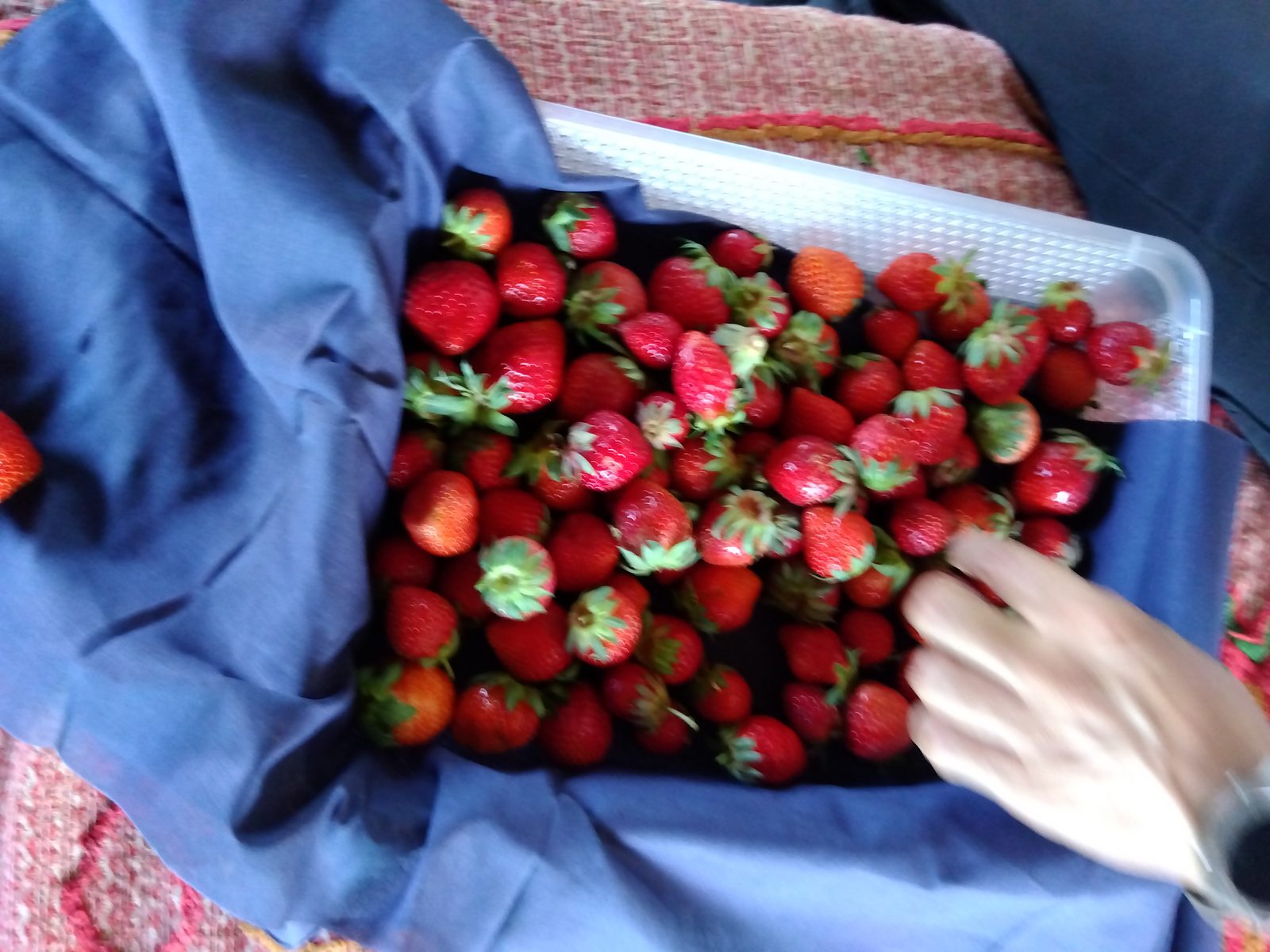
A berry is picked at the right shoulder colour, not the most convenient one, because that’s where the Brix is. Pick early and you ship sourness that will never sweeten; pick late and you ship a berry that’s already spending its shelf life. The window is narrow, and we pick to it — by hand, into a single shallow tray, calyx-up, so nothing carries the weight of anything above it.
The moment a berry leaves the plant at field temperature, it starts respiring away the sugar we spent three months building. So the tray doesn’t sit. Field heat is pulled out fast, and the cold chain takes over from there.
One layer, calyx-up, into the box
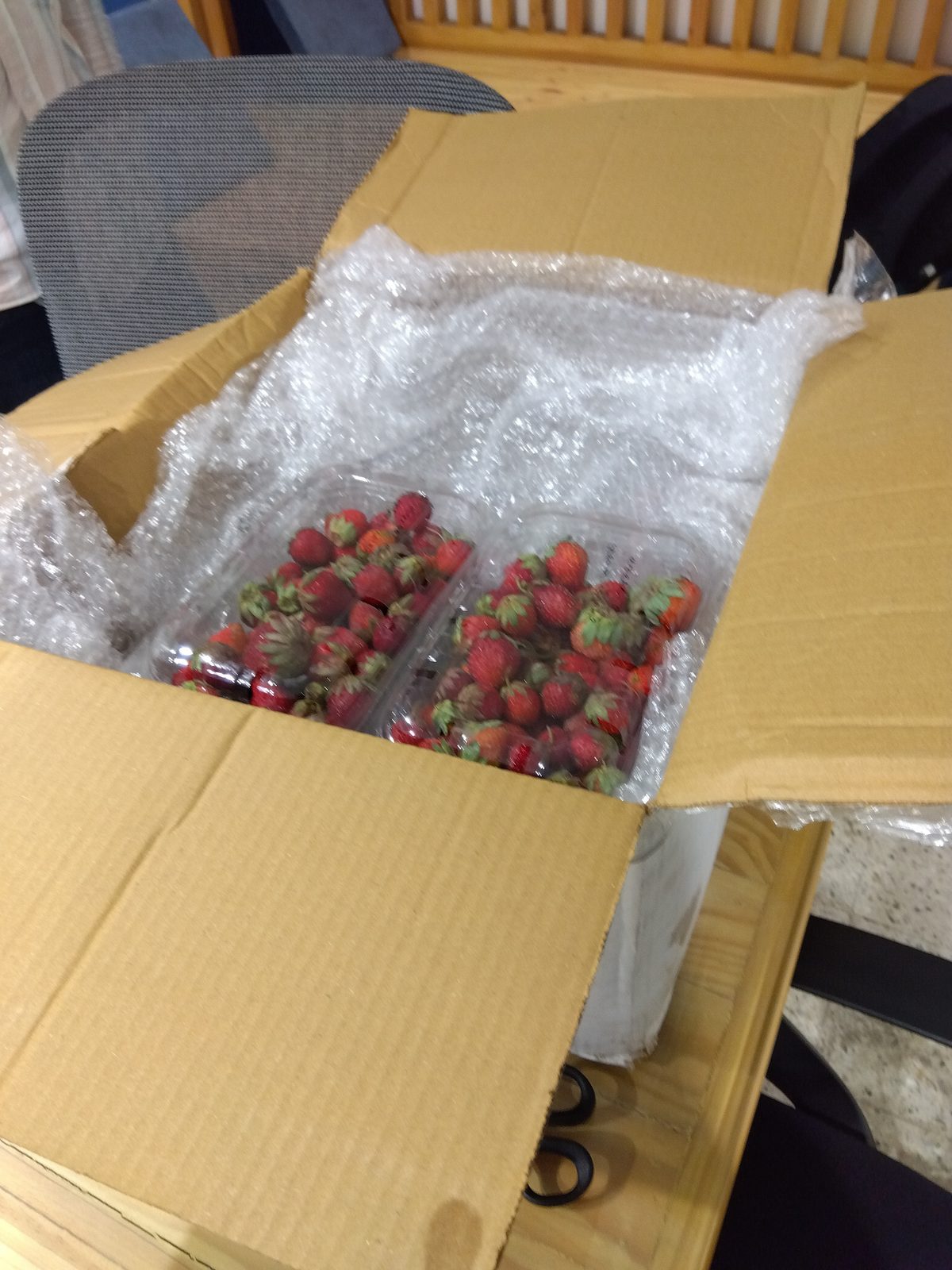
What you order is what you should plate — so the berries are packed the way they were picked: a single inspectable layer, calyx-up, cushioned, never crushed three-deep into a flat. From here they move on a pooled, temperature-controlled cold chain — the same shared cold-chain model behind Vegibus — so a restaurant pays for the berries and the cold, not for a dedicated truck or for someone else’s spoilage.
Behind the operation is M2labo Bharat Pvt. Ltd., the India arm of Japan’s M2Labo — backed by Suzuki — which is the boring but important part: a field that will still be there, and a method that will still be running, next season.
Why a method beats a harvest
Anyone can have one good harvest. A kitchen can’t build a menu on one good harvest. What the field above is really producing isn’t a berry — it’s repeatability: the same cultivar, the same root environment, the same pick discipline, the same cold chain, week after week. That’s the thing a pastry section can actually plan around.
Taste it from the source
Tell us your city, the dishes you’re building, and a rough weekly volume, and we’ll come back with grades, pack sizes, crate prices and the nearest delivery schedule — and, if you want it, a sample box straight from the field above.
→ Request a sample box and current crate prices on our contact page.
- 📞 Ishita Shroff — +91 98314 79900
- 📞 Mitesh Furia — +91 98207 73767
- ✉️ contact-bharat@m2-labo.jp
ICHIGO™ — Japanese strawberry cultivars, grown in India. Produced by M2Labo (M2labo Bharat Pvt. Ltd.).
Japanese strawberry quality, grown in India's hills.
Notes from the farm, the cold chain and the chefs putting Indian strawberries on the world's tables.